Church of England
Of Human BondageThe Church of England is the established religious institution that governs much of Philip Carey’s early environment, from the household of his uncle, Mr. Carey, to his schooling and religious instruction. Its influence is practical as well as doctrinal: it organizes parish life, marks social belonging, and supplies the beliefs Philip eventually sheds. His loss of faith is therefore not simply a private change of opinion; it follows exposure to other religious communities and to the limits of the religious world in which he was raised.
Parish Life and Local Authority
At Blackstable, the Church of England’s authority reaches into ordinary routines and transactions. Mrs. Carey’s shopping is shaped by the expectation that the vicarage should deal only with churchgoing tradespeople. The two churchgoing butchers compete for its custom, while the Vicar treats a butcher’s possible move to chapel as a matter serious enough to threaten permanent exclusion from the household’s trade. The parish church stands two miles from town, and three chapels in the High Street trouble the Vicar as signs of dissent that, in his view, ought not to have been permitted.
The church’s local influence is also exercised through its personnel. Josiah Graves, the bank manager, serves as choir-master, treasurer, and churchwarden, arranges parish and school events, and prepares for visits by the Bishop or Rural Dean. He often acts without consulting the Vicar, who resents what he regards as Graves’s assumption of importance even while relying on him to handle parish business. The arrangement exposes a tension between clerical authority and the practical power of a lay church officer.
That tension becomes open conflict when a Conservative candidate is due to speak at the Mission Hall. Graves has arranged the meeting and is asked to chair it; Mr. Carey insists that the Vicar, as the parish’s spiritual head, should receive that deference. Their dispute over who may preside becomes a dispute over control of the hall and the standing of the church. Graves resigns his offices, and his sister gives up her role in a maternity club that supplies poor pregnant women with flannel, baby linen, coal, and five shillings. The women eventually mediate a reconciliation, and the meeting proceeds with a doctor as chairman. The episode reveals how church governance depends on cooperation even when its leaders present their settlement as a matter of religious principle.
The Vicar and the Church’s Traditions
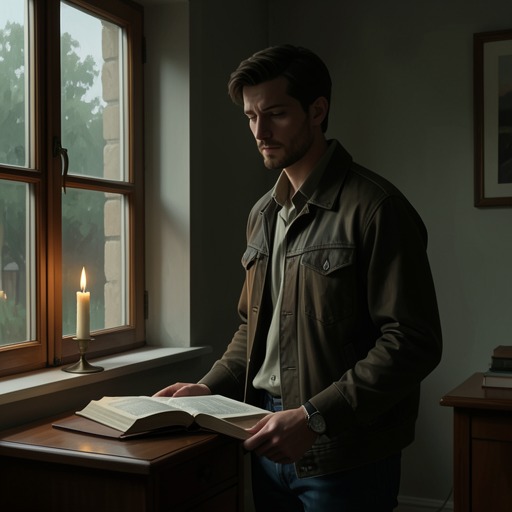
Mr. Carey’s own religious identity is more complicated than the low-church character of his parish might suggest. He dislikes being called a Protestant and considers the Church of England Catholic in a fuller sense than the Roman Catholic Church. His sympathy for Roman Catholicism dates to his Oxford years, and he would prefer more ornate worship, including processions and lighted candles, though he draws the line at incense. A pair of second-hand candlesticks on the altar brings his disagreement with Graves back into view: Graves calls them popish, while the Vicar refuses to remove them.
The Vicar’s attachment to ceremonial forms coexists with a strong sense of personal jurisdiction. During the dispute over the Mission Hall, he argues that the churchwarden should not preside while the Vicar is present and threatens to withhold the hall from the political meeting. His authority is thus not only a matter of doctrine or worship; it is also a claim to precedence within the parish. The novel places that claim beside his more private attraction to Catholic ritual, showing a churchman whose institutional position and religious temper do not neatly match the parish’s conventional image of Anglicanism.
School, Class, and Religious Inheritance
The Church of England’s influence extends from the parish into the King’s School at Tercanbury, an institution that traces its origins to a pre-Conquest abbey school and was reorganized under Henry VIII. It has educated generations of local professional and landowning families, especially men who became clergy. Some boys arrive already expecting ordination. Yet the school’s religious tradition is also bound to class distinctions: in its social vocabulary, a tradesman is someone who neither owns land nor belongs to one of the professions considered suitable for a gentleman.
The appointment of Tom Perkins exposes the class assumptions operating within this church-linked institution. The masters had expected Mr. Watson to become headmaster, but the Chapter appoints Perkins, whose father is a linendraper. The masters remember that Perkins was a brilliant scholarship boy whose education cost him nothing, yet they treat his commercial family background as evidence that he is not a gentleman. The school’s institutional history and clerical purpose therefore coexist with a hierarchy that measures social fitness by birth and occupation.
Philip’s religious education initially makes the Church of England’s claims feel unquestionable. During a wave of school piety, he joins the Bible League, pays half a crown, and undertakes to read assigned Scripture each night for a year. He receives a daily-reading calendar and a prayer sheet, and completes the readings without criticism, even when the biblical stories contain acts he would condemn in ordinary life. The discipline gives religious authority a place in his daily routine while teaching him to suspend his own judgment about what he reads.
Doubt and the Loss of Faith
Philip’s inherited certainty begins to weaken when his experience makes exclusive claims to salvation difficult to sustain. In Germany he attends Lutheran worship for the sake of learning the language and later goes to Mass with Hayward. The contrast between the nearly empty, listless Protestant church and the crowded Jesuit service, whose worshippers appear to pray sincerely, conflicts with what Philip had been taught about other faiths. He recognizes that a person’s religion may depend on the country and family into which that person is born, and that sincere conviction is not confined to the Church of England.
Weeks further unsettles Philip’s assumptions. Though he believes little of what Philip believes, Weeks lives with sincerity and kindness; when illness keeps Philip in bed for three days, he nurses him with maternal care. That example contradicts the teaching Philip has absorbed that unbelief must accompany wickedness. Conversations with Weeks lead Philip to consider that adherents of different religions can all be convinced that their own beliefs are true, without that conviction proving any one faith correct.
The decisive change arrives when Philip says that he sees no reason to believe in God and realizes, as soon as the words are spoken, that belief has already left him. He reads skeptical books in the following weeks, but they confirm rather than create the change. He understands that faith had been imposed by environment and example, not sustained by a religious temperament of his own. At first its absence makes life seem colder and more solitary; soon he experiences release from the services and religious exercises that had felt burdensome since his childhood at Tercanbury and Blackstable.
Religion, Morality, and the Novel’s Contrast
The novel distinguishes religious belief from moral conduct through the contrast between Philip’s Anglican upbringing and Weeks’s example. Philip had been taught to associate unbelief with vice, yet Weeks’s care makes that equation untenable. Later, Athelny offers a different account: religion may serve as a vehicle through which morality is learned, so that moral habits can remain even after religious belief disappears. Philip, whose childhood Christianity is associated with cold services and enforced observance, initially regards that explanation as preserving morality after its religious foundation has been removed.
Across these episodes, the Church of England appears as more than a set of doctrines. It is a parish system, a school tradition, a source of household and institutional authority, and a marker of social distinction. Philip’s departure from its faith does not erase the influence of that upbringing; it clarifies how much of what he had accepted as religious truth was reinforced by habit, example, and the structures surrounding him. The contrast between institutional certainty and lived kindness becomes one of the means by which the novel makes religious doubt concrete.